
Michigan winter garage door maintenance starts before the first freeze. A door that works well in September can behave differently once temperatures drop.
Cold temperatures, moisture, snow, road salt and repeated freeze-thaw cycles put additional stress on garage door springs, rollers, hinges, weather seals and opener systems. Small problems that are easy to ignore during warmer weather can become much more noticeable once winter arrives.
For homeowners throughout Southeast Michigan, including Farmington Hills, Troy, Royal Oak, Commerce Township, Sterling Heights and surrounding communities, fall is a smart time to give the garage door a closer look.
This Michigan winter garage door maintenance checklist explains what homeowners can safely inspect and when it is better to call a garage door professional.
1. Listen to the Door Before Winter Arrives
Open and close the garage door several times and listen carefully.
A healthy garage door does not have to be completely silent, but new sounds deserve attention.
Watch for:
- grinding
- scraping
- popping
- squealing
- rattling
- banging
- sudden vibration
Noise often develops gradually, which makes it easy to get used to it.
A new sound can point to worn rollers, loose hardware, poor lubrication, track problems or a door that is no longer moving evenly.
Fixing a small mechanical problem before freezing weather arrives may prevent a larger failure later.
2. Look at the Garage Door Springs
Garage door springs perform much of the heavy lifting involved in opening and closing the door.
Visually inspect them from a safe distance.
Look for:
- obvious rust
- separated coils
- uneven appearance
- visible gaps
- unusual stretching
- damaged spring hardware
Do not attempt to adjust, unwind, remove or replace a torsion spring yourself.
Garage door springs store significant mechanical energy and should be serviced by someone with the proper equipment and training.
If the door suddenly feels unusually heavy or opens only a few inches, stop operating it and have the spring system inspected.
For spring-related problems, RL Door Solutions also provides professional garage door spring replacement.
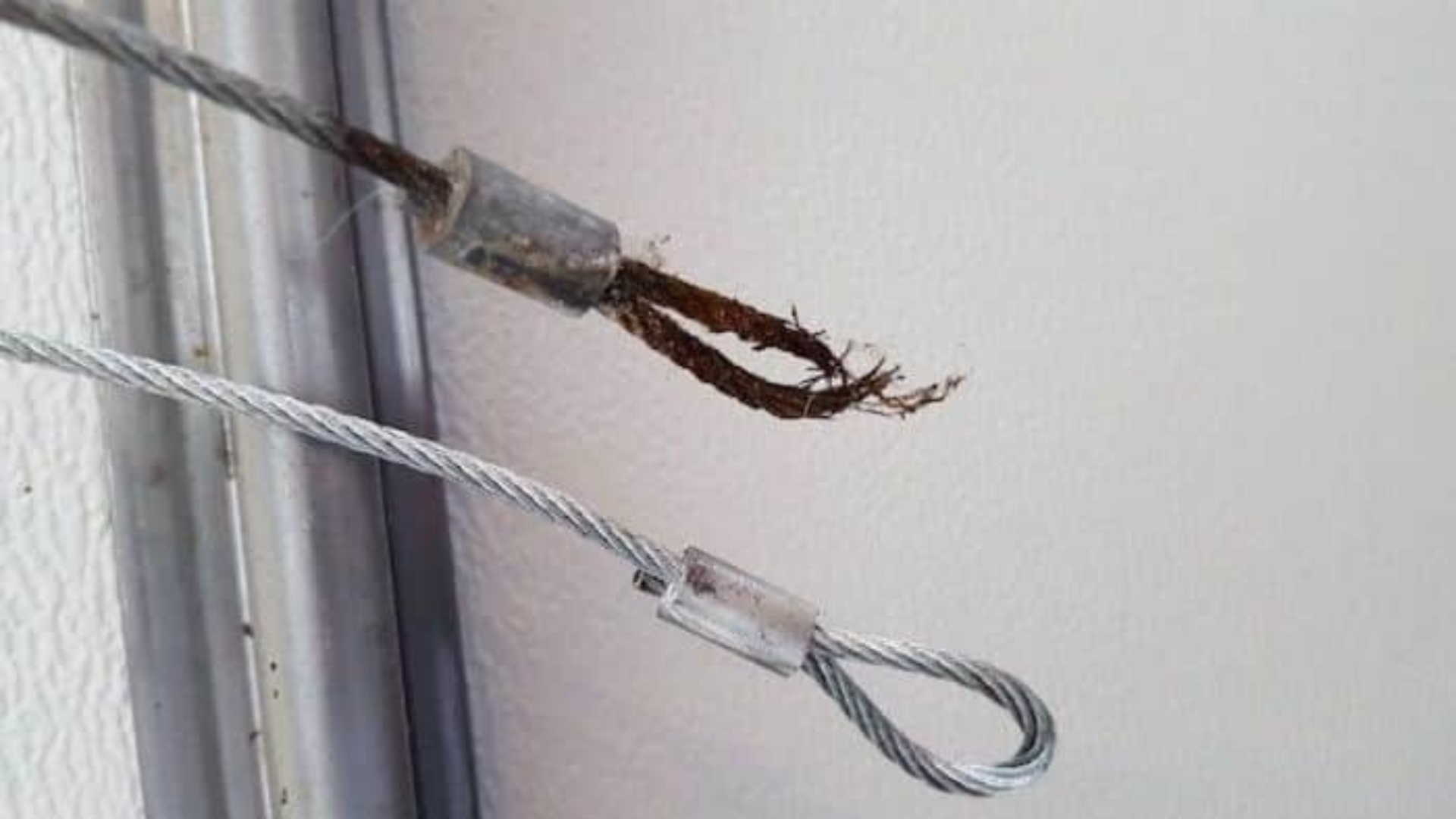
3. Inspect Cables Without Touching Them
Lift cables work together with the spring system.
A cable that begins fraying may continue operating temporarily, but that does not mean it is safe.
Look for:
- loose strands
- rust
- fraying
- cables that appear uneven
- cable material hanging near the drum
- one side of the door sitting lower than the other
Never pull, loosen or reposition a cable under tension.
If something looks wrong, leave the door alone until it can be inspected.
4. Check Rollers and Hinges
Rollers guide the door through the tracks.
Look for rollers that:
- wobble
- appear cracked
- lean sideways
- bind while moving
- produce excessive noise
Also inspect visible hinges for loose fasteners or damage.
Cold weather does not automatically destroy rollers or hinges, but existing wear can become much more obvious when components stiffen and the system is working under winter conditions.
5. Use the Correct Lubrication
Proper lubrication can help moving components operate smoothly.
Use a garage-door-appropriate lubricant according to the door or hardware manufacturer’s recommendations.
Typical lubrication points may include appropriate hinges, rollers with serviceable bearings and spring surfaces where recommended.
Do not coat the garage door tracks with heavy grease.
Tracks generally need to remain clean so rollers can travel freely.
6. Clean the Tracks
Leaves, dust, dirt and other debris can accumulate inside the vertical track area.
Visually check both sides and remove loose debris that is safely accessible.
Do not attempt to bend or realign a damaged track yourself.
If the track is dented, separated or badly misaligned, professional repair may be needed.
7. Inspect the Bottom Weather Seal
The rubber or vinyl seal at the bottom of the garage door is especially important during a Michigan winter.
It helps reduce entry of:
- cold air
- rain
- snow
- leaves
- dirt
- insects
A hardened, torn or flattened seal may allow moisture beneath the door.
That moisture can freeze overnight and bond the bottom seal to the driveway or garage floor.
Inspect the entire width of the seal before winter.
8. Check the Side and Top Weatherstripping
Weatherstripping around the perimeter of the door should make reasonable contact when the door is closed.
Look for daylight around:
- the sides
- top corners
- center seams
- bottom edge
Visible gaps can make the garage less comfortable and allow wind-driven snow or moisture inside.
9. Test the Safety Sensors
Most modern garage door openers use photo-eye safety sensors near the floor.
Make sure:
- both sensors are mounted securely
- lenses are clean
- nothing blocks the beam
- wiring does not appear damaged
A door that opens normally but refuses to close can sometimes be experiencing a sensor alignment or obstruction problem rather than a major opener failure.
10. Watch How the Door Moves
Stand inside the garage at a safe distance and operate the door normally.
The door should move in a controlled manner.
Call for service if you notice:
- one side rising faster
- jerky movement
- the door shaking excessively
- the door stopping halfway
- the opener struggling
- a door that suddenly reverses
These symptoms can involve several components and should be diagnosed before repeated operation causes additional damage.
11. Check Your Garage Door Opener
Cold weather may reveal an opener system that was already approaching the end of reliable operation.
Check:
- remotes
- wall controls
- keypad
- safety sensors
- opener lights
- Wi-Fi features if equipped
If the opener makes noise but the door barely moves, do not assume the motor is necessarily the problem.
The door itself may be too heavy because of a spring or mechanical issue.
RL Door Solutions provides garage door opener repair and installation throughout Southeast Michigan.
12. Clear Snow and Ice Around the Door
During winter, keep snow and accumulated ice away from the bottom edge of the garage door.
Repeated melting and refreezing can trap the bottom seal.
Avoid repeatedly pressing the opener button when the door is frozen to the ground.
The opener may continue pulling while the door remains stuck, placing unnecessary stress on the opener, top section and other hardware.
When Should You Schedule Professional Garage Door Maintenance?
Consider professional inspection when:
- the door has become noticeably louder
- it moves unevenly
- a spring appears damaged
- cables are fraying
- the opener is struggling
- the door feels unusually heavy
- weather seals are badly deteriorated
- the door has not been professionally inspected in years
Preventive attention is usually easier than dealing with a garage door that will not open on a freezing Michigan morning.
Professional Help With Michigan Winter Garage Door Maintenance
RL Door Solutions provides residential garage door repair and service throughout Southeast Michigan.
If your garage door is noisy, heavy, stuck, uneven or simply does not seem ready for another Michigan winter, call:
RL Door Solutions — 248-954-2440
Frequently Asked Questions
Should I lubricate my garage door before winter?
Fall is a good time to inspect appropriate moving components and apply a garage-door-compatible lubricant where recommended. Avoid filling the tracks with heavy grease.
Can cold weather cause a garage door spring to break?
Springs fail primarily because of accumulated cycles, wear, corrosion and fatigue. Cold conditions can make an already worn system reveal its weaknesses.
Should I keep using my opener if the garage door feels heavy?
No. A suddenly heavy door can indicate a spring or counterbalance problem. Continuing to operate it may place additional strain on the opener.
Why does my garage door freeze to the floor?
Moisture beneath the bottom weather seal can freeze and bond the seal to the floor or driveway.
Related Garage Door Guides
- Garage Door Frozen to the Ground? What Michigan Homeowners Should Do
- Garage Door Weatherstripping in Michigan: Bottom Seals, Drafts, Snow and Ice
For help with your door, request service from RL Door Solutions.
For additional precautions, read DASMA’s garage door safety tips and follow your door manufacturer’s instructions.